We hear the same sentence in the consultation room several times a week: “I’m unhappy with my stomach, but I can’t decide whether I need liposuction or a tummy tuck.” That hesitation is completely understandable. Online, the two procedures are usually described side by side, both promise a flat stomach, and from the outside the difference is far from obvious. Yet these two operations are not alternatives to each other. They fix different problems, and when the wrong one is chosen, the result pleases neither the patient nor the surgeon.
This article won’t make the decision for you. Only a physical examination can do that. What it will do is show you how to look at your own abdomen before you come in. Most people who ask themselves the handful of questions below discover that the answer isn’t nearly as unclear as they thought.
First things first: the two operations touch different things
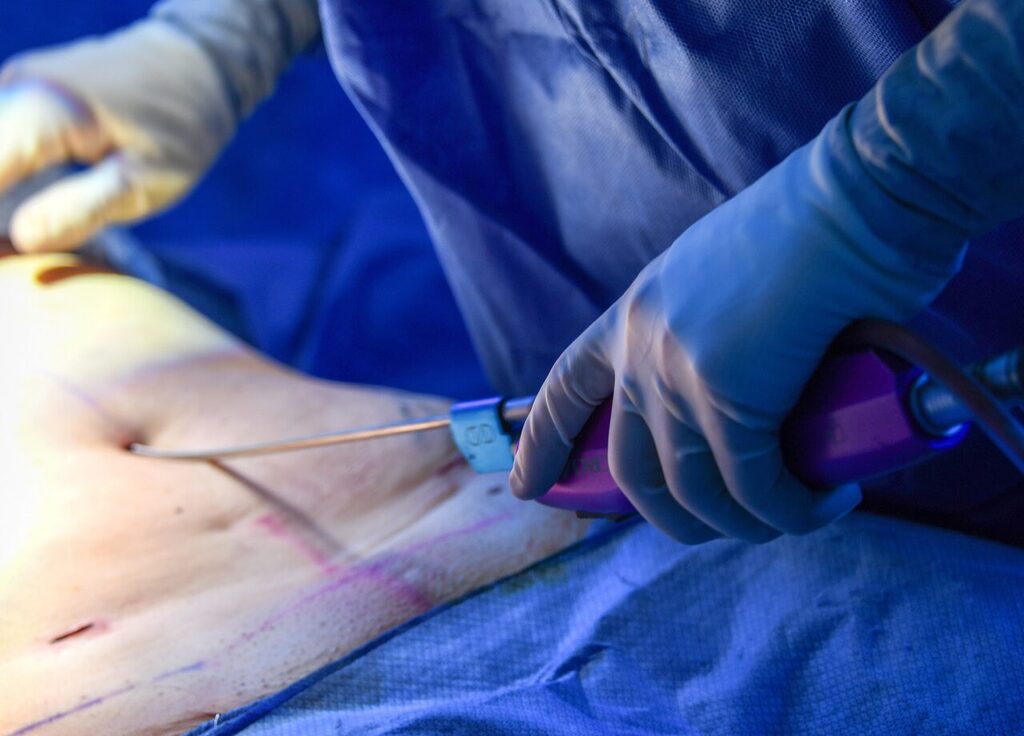
Liposuction, as the name suggests, removes fat. Thin cannulas draw out the fat layer beneath the skin; the skin itself, the muscles and the navel are left alone. It’s done through openings a few millimetres long and leaves scars you’d struggle to find a year later. What doesn’t it do? It won’t tighten loose skin, it won’t erase stretch marks, and it won’t bring separated abdominal muscles back together. In fact, if your skin has lost its elasticity, removing the fat underneath can leave it looking emptier and worse than before.
A tummy tuck (abdominoplasty) is a skin and muscle operation. The excess skin below the navel is removed, the abdominal muscles that drifted apart during pregnancy are stitched back together along the midline if necessary, and the navel is repositioned. Liposuction of the waist and flanks is often added in the same session. The price is a longer scar and a longer recovery.
So the question is never “which one is better”. It’s “what exactly is wrong with my abdomen”. If the problem is fat, liposuction. If it’s skin and muscle, a tummy tuck. If it’s both, then both.
Trust your fingers, not the mirror
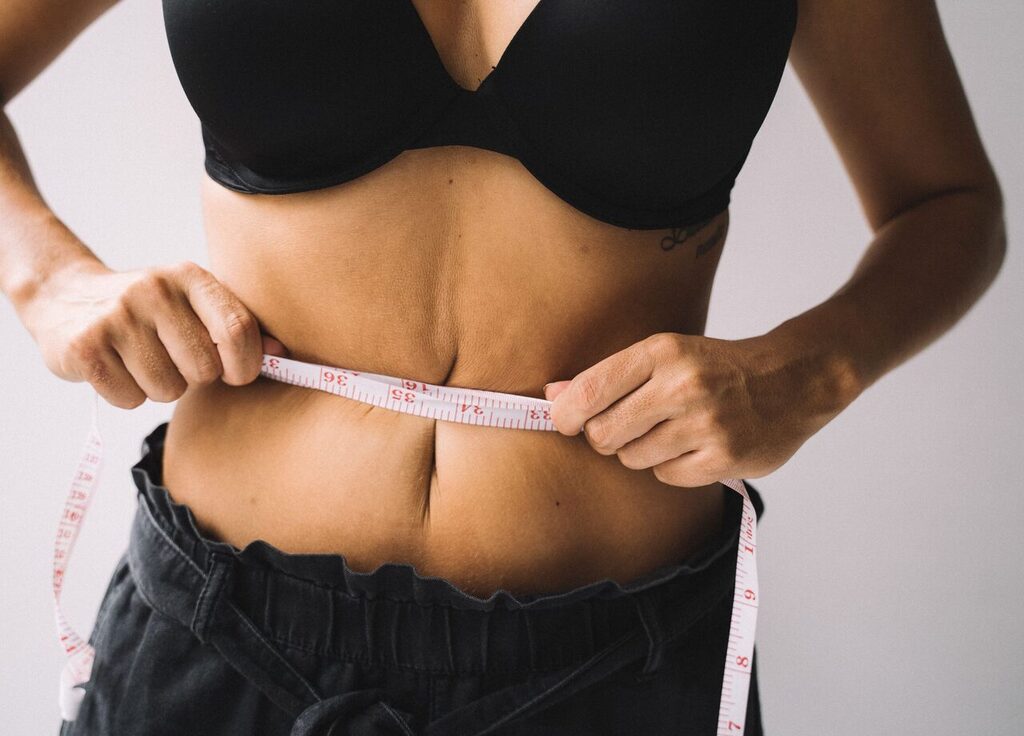
The most useful test you can do at home is the same one we do in the clinic. Stand up, pinch the skin below your navel between two fingers and pull. If the skin comes away easily, folds over itself and settles back slowly when you let go, you have excess skin. If it feels tight and you notice a soft fullness underneath when you pinch, the problem is fat.
The second clue is sitting down. If a distinct fold appears across your abdomen when you sit and disappears completely when you stand, your skin is still doing its job. If the fold stays put whether you’re sitting or standing, or hangs over your waistband when you’re upright, liposuction won’t fix that skin.
The third clue is stretch marks. A stretch mark is a tear in the deeper layer of the skin. Skin covered in them has lost most of its ability to spring back, so it won’t retract after fat is removed. If you have dense stretch marks below the navel, a tummy tuck removes that section of skin altogether, and most of the marks go with it. Patients rarely expect this, and it’s usually a welcome bonus.
No decision without talking about weight
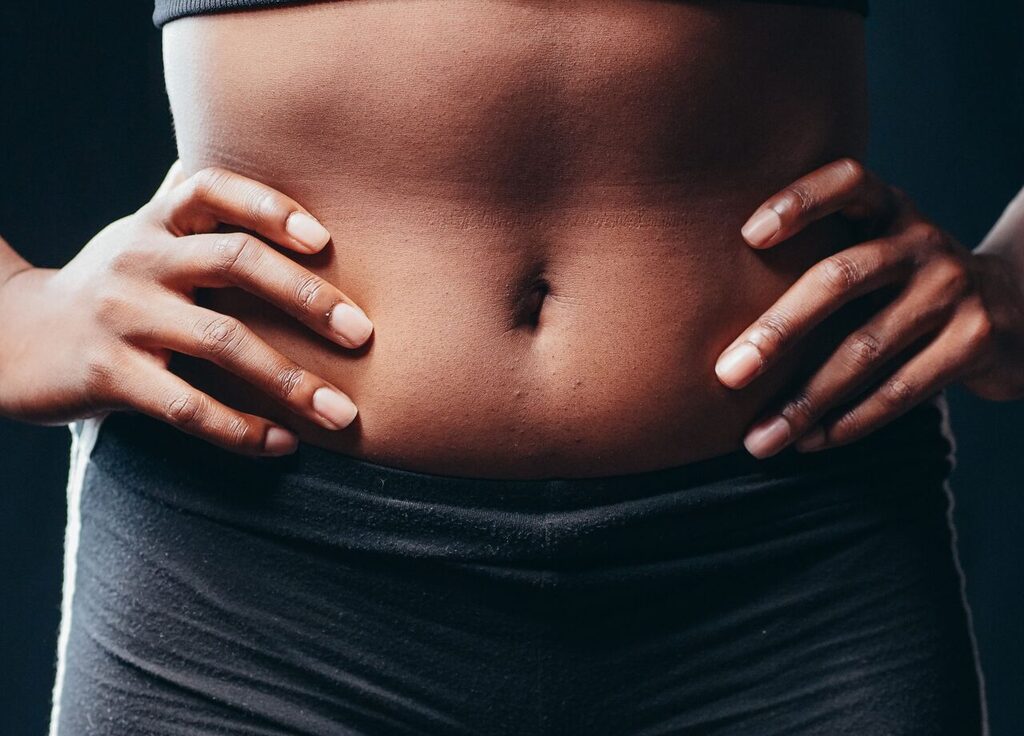
One rule applies to both operations: neither is a weight-loss method. There is a safe upper limit to how much fat can be removed in a single liposuction session, and it isn’t high enough to produce a noticeable change on the scales. A tummy tuck, likewise, is a shaping operation, not a slimming one.
That’s why one of the first questions we ask is: “Has your weight been stable for the last six months?” If someone who is still losing weight has a tummy tuck, the kilos they lose afterwards create new skin laxity and the operation is wasted. The reverse is just as true: gaining eight or ten kilos after liposuction simply sends the fat to other areas. The ideal candidate is someone sitting close to their target weight who has stayed there for at least a few months.
Pregnancy plans matter here too. We don’t recommend a tummy tuck to anyone planning a child in the near future; pregnancy reopens the muscles and stretches the skin all over again. Liposuction is more forgiving in this respect, but even then, how long the result lasts depends on keeping your weight steady.
After childbirth, the muscles join the conversation
During pregnancy the growing uterus pushes the two vertical bands of abdominal muscle away from the midline. We call this diastasis recti. In most women the gap closes on its own after delivery, but in some it never does. The symptom is typical: weight is normal, exercise is regular, and yet the belly still bulges forward, and we hear “I look like I’m still three months pregnant.”
That bulge isn’t fat. It’s a gap in the muscle wall. A hundred sit-ups won’t close it, and liposuction won’t remove it. During a tummy tuck we stitch those two muscle bands back together along the midline, and only then does the abdomen truly flatten. So for a woman who has had one or more children and whose belly pushes forward, the first option we usually consider is a tummy tuck.
Recovery and scars: an honest comparison
After liposuction, most patients are walking around at home the next day and back at a desk job within three or four days. Swelling and bruising last a few weeks, and a compression garment is worn for four to six weeks. The final shape settles in at around three months. The scars are a few millimetres long and fade until they’re almost invisible.
A tummy tuck is a bigger operation. For the first week or two you walk slightly bent forward, because the skin has been sewn under tension. Returning to work usually takes about two weeks; heavy lifting and sport wait six weeks. The scar runs horizontally along the bikini line from one hip bone to the other. It’s red and prominent in the early months and fades to a pale line by the end of a year. If a patient is genuinely troubled by the idea of that scar, we think twice before recommending a full tummy tuck, and in people with milder laxity a mini tummy tuck with a shorter scar is sometimes on the table.
Can the two be combined?
Yes, and we do it often. In what’s called a lipoabdominoplasty, fat is first removed from the waist and flanks, and then the abdominal skin is tightened. The result is a flat front and a slim waistline from the side. But this combined approach isn’t right for everyone. For the sake of blood supply to the skin, we have to be careful about how much fat is removed and how far the skin is lifted. In smokers, people with poorly controlled diabetes and patients with a high body mass index, we prefer either to postpone the combination or to split it into two separate sessions.
What should you bring to the consultation?
Not much, honestly, but a few details speed things up. We’d like to know how your weight has changed over the past year, how many pregnancies you’ve had and how you delivered, which medications you take and whether you smoke. Any previous abdominal surgery, especially a caesarean section, directly affects the surgical plan.
With patients coming from other cities or from abroad, we start with a preliminary assessment from photographs. Three pictures, taken standing from the front, from the side and while seated, tell us a great deal before we meet in person. Even so, the final decision is always made in the examination room. Nobody has yet found a way to do the pinch test over a screen.
One last note: none of the criteria in this article decides anything on its own. In-between cases are very common, such as loose skin without stretch marks, or an ideal weight with separated muscles. In those situations we go through the pros and cons of both options together, and sometimes the conclusion is “let’s not do either for now and look again in six months.” The right timing shapes the outcome just as much as the right operation.