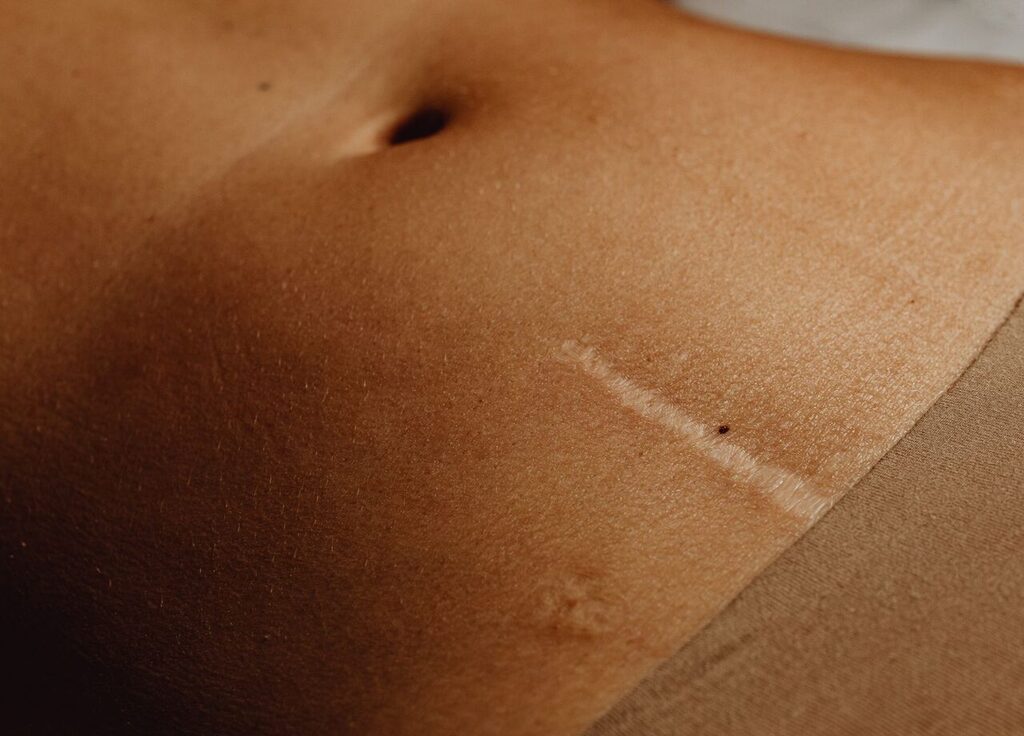
It is the second most common question we hear in consultation: “Will there be a scar?” The first is the price; the third is when they can go back to work. The answer is more blunt than anyone wants: Yes, every incision leaves a scar. Wherever a blade passes through skin, the body builds repair tissue, and that tissue is never an exact copy of the skin around it. The real question is not whether a scar will remain, but where it will sit, how visible it will be, and how you will feel when you look at it a year from now.
This article explains exactly where the incision is planned in the most common operations, such as tummy tuck, breast surgery, liposuction and facelift, how a scar changes from day one to month eighteen, and which parts of scar care actually work. It also explains why the phrase “scarless surgery” in a brochure is misleading.
In this article
- Why a scar is unavoidable, and what a “good scar” means
- Where the incision is hidden in five common operations
- The eighteen-month timeline of a maturing scar
- Silicone, sun, massage, tape: which ones have evidence behind them
- The difference between a poor scar, a hypertrophic scar and a keloid
- The questions patients ask most about scars
What a scar is, and why it never fully disappears
When skin is cut, the body does two things at once: it closes the gap and reinforces the area. It does this by rapidly weaving a fibrous protein called collagen, and it weaves it in a disorganised way. In healthy skin, collagen runs in every direction like a basket weave; in scar tissue the fibres line up in parallel. That is why a scar looks shiny, feels slightly firm and differs from the surrounding skin. Sweat glands, hair follicles and pigment cells do not regrow there, so the scar stays either lighter or darker than its neighbours in the sun.
So no surgeon can honestly tell you “there will be no scar”. What a surgeon can say is this: I will hide it under your underwear line, place it parallel to the natural skin creases, close it in a way that takes tension off the edges, and after a year you will have to look for it. In aesthetic surgery that is exactly what a “good scar” means: a thin, flat, pale line that stays under clothing.
A scar is the signature of the operation. It cannot be erased, but it can be made illegible.Something we say often in the consultation room
Five common operations, five different scar plans
Each operation has its own scar logic. Below is the way we draw it for patients in the consultation room.
Tummy tuck: long, but low
A tummy tuck leaves the longest scar in aesthetic surgery, and that should be said at the outset. The incision runs from one hip bone to the other, just above the pubic crease. Its length depends on how much excess skin there is, usually between thirty and forty-five centimetres. The skill lies not in making it short, but in keeping it low. Before surgery we ask the patient to put on the bikini bottom or underwear they wear most often and draw the line along its edge. A well-planned tummy tuck scar is invisible at the beach in swimwear.
The second scar is around the navel. As the skin is pulled downward, the navel stays in place and is brought out through a new opening. Because this scar sits inside the hollow, most patients no longer notice it after a year. In a mini tummy tuck the navel is left untouched and the lower scar is shorter, but that method only suits patients whose excess is confined to the area below the navel.
Breast surgery: small, hidden, or anchor-shaped
In breast augmentation the scar is a single line of two and a half to five centimetres, placed in one of three locations: the fold beneath the breast, the edge of the darker ring around the nipple, or the armpit. We most often choose the fold beneath the breast; once settled, the scar disappears into its shadow and it offers the most controlled access to the implant pocket. The scar at the edge of the areola hides along the colour boundary but carries small additional risks for breastfeeding and sensation.
Breast lift and reduction are a different matter. Because excess skin is removed, the scar circles the nipple and usually continues as a vertical line downward. In larger reductions a horizontal line in the fold beneath the breast is added, producing the “inverted T” or “anchor” pattern. These scars fade noticeably within the year, but a bra does not cover the vertical part. Trying to fix a sagging breast with an implant alone, in order to avoid this scar, is a common mistake; the result is usually a larger breast that still sags.
Liposuction: a few millimetres, but more than one
Liposuction is the most innocent operation when it comes to scars. The entry points for the cannula are three to five millimetres wide and are hidden inside the navel, in the groin crease, along the hip line or in the armpit. One area usually needs two to four entry points. A year later they are indistinguishable from a small acne mark. The real “scar” of liposuction, however, is not on the skin but beneath it: fat removed unevenly can leave a wavy surface. When patients ask about scars, what we explain is that the surface matters, not the holes.
Facelift: a line tucked behind hair and ear
The facelift scar starts in the hairline at the temple, follows the natural crease in front of the ear, curves under the earlobe, continues behind the ear and disappears into the hair at the nape. The total length can reach fifteen centimetres, but the part that can be followed by the naked eye is the few centimetres in front of the ear. After a well-executed facelift the scar has to be searched for even with the hair tied up. An earlobe pulled downward into a “pixie ear” is the calling card of operations in which tension was distributed wrongly, and it should not appear with good planning.
Arm and thigh lift: being honest about what shows
In an arm lift the scar runs along the inner surface of the arm from the armpit towards the elbow. In a thigh lift it sits in the groin crease or runs down the inner thigh. These are the most visible scars in aesthetic surgery, and that has to be said without softening it. Patients ask for these operations because living with hanging skin is harder for them than living with a scar; in other words, they make a trade. The question we ask in consultation is this: “When you wear short sleeves, does a line on the inside of your arm bother you more, or does the skin swinging when you raise your arm?” If the answer is clear, so is the operation.
The eighteen-month story of a scar
A scar is not finished on the operating table; it begins there. The point where patients most often go wrong is looking at the scar in the second or third month and panicking. That is the period in which a scar looks its worst, and it is normal.
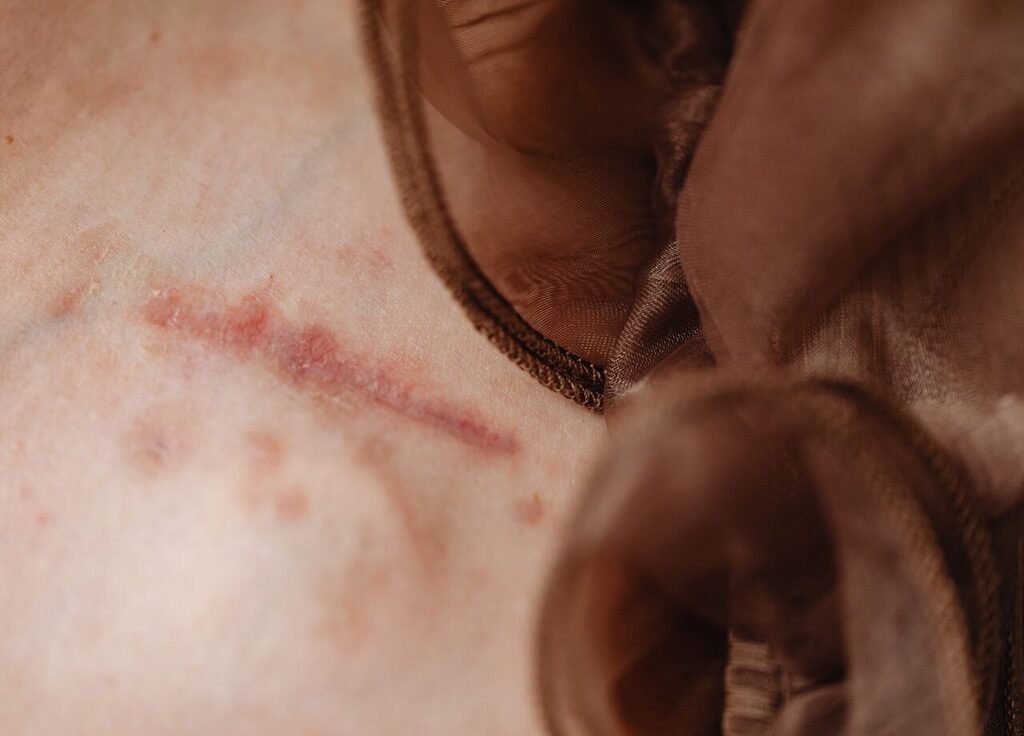
The first two weeks are the wound-closure period. The scar is thin, pink and flat; the sutures either dissolve on their own or are removed at the end of a week. The only things to do in this period are to keep the incision dry and taped, not to scratch it and not to stretch it. Many patients comment this week on how “nice” the scar looks; we remind them from the start that this delight is temporary.
From the third week to the third month comes the intense phase of maturation. Collagen production accelerates; the scar turns red, thickens, may itch and feels firm to the touch. Mild pain on pressure at the end of the day is normal. Silicone gel or silicone sheets are started in exactly this window, because this is the phase in which it is easiest to stop a scar from rising.
Between three and six months the redness slowly recedes and the thickness begins to settle. After the sixth month the scar approaches the colour of the surrounding skin, softens and turns into a fine line. Full maturation takes a year, and in some areas eighteen months. That is why the verdict on whether a scar is good or bad is given at the first year, not the third month. If a revision is needed, it waits until then too.
Scar care: what works and what does not
In this field the market is well ahead of the evidence. There are dozens of “scar removers” on the shelf; only a handful have actually been shown to work. The four headings below are what we use and what we recommend to patients.

Tape and tension control come first. The most important cause of a scar widening is the tension pulling its two edges apart. Paper tape kept over the incision for the first six to eight weeks reduces that pull. We place particular weight on this in tummy tucks and breast reductions. The tape can get wet in the shower; when it falls off on its own, a new one is applied.
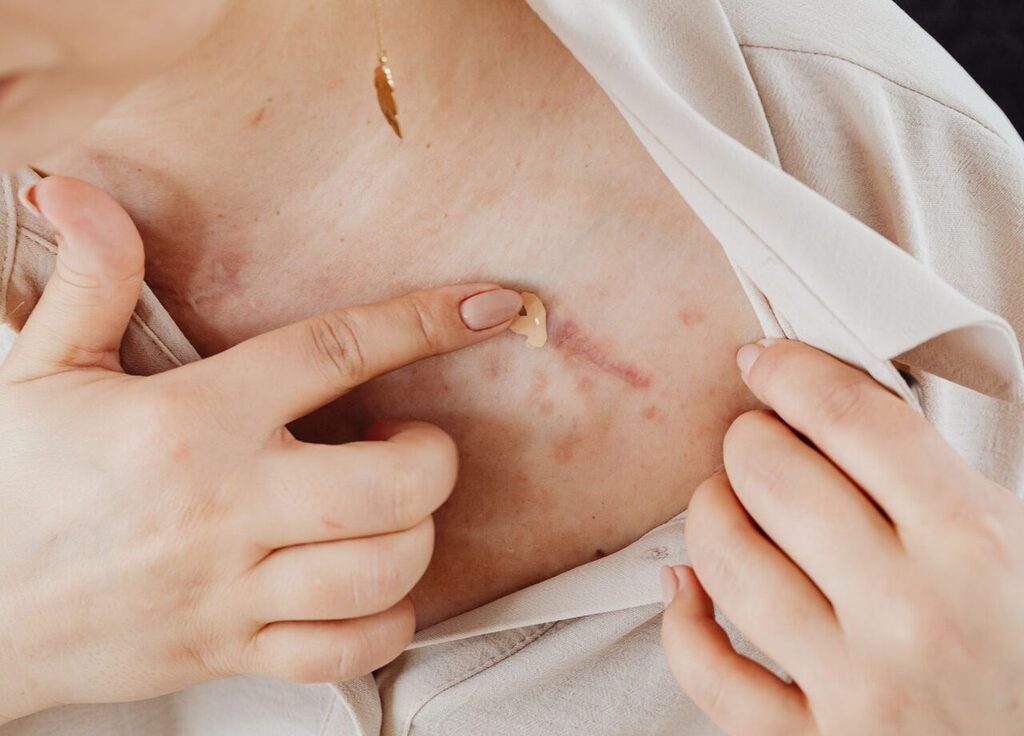
Silicone gel and silicone sheets are the method with the best-documented effect in scar care. How they work is not fully understood; they are thought to slow collagen production by creating a moist, occluded environment over the scar. They are started after the sutures are out and the wound has fully closed, applied twice a day as a thin layer or worn as a sheet overnight. The minimum course is three months, extended to six in scars prone to thickening. They need not be expensive; a plain gel whose active ingredient is silicone is enough.

Sun protection is the step most patients underestimate and the one that changes the outcome most. In fresh scar tissue the pigment cells are disorganised; when exposed to sun, the scar can darken permanently and never lighten again. For the whole first year the scar should see no sun, and if it does, it should be covered with at least factor fifty. We advise patients who have surgery in summer to swim with the scar covered by tape; sunbeds are completely off limits for that year.
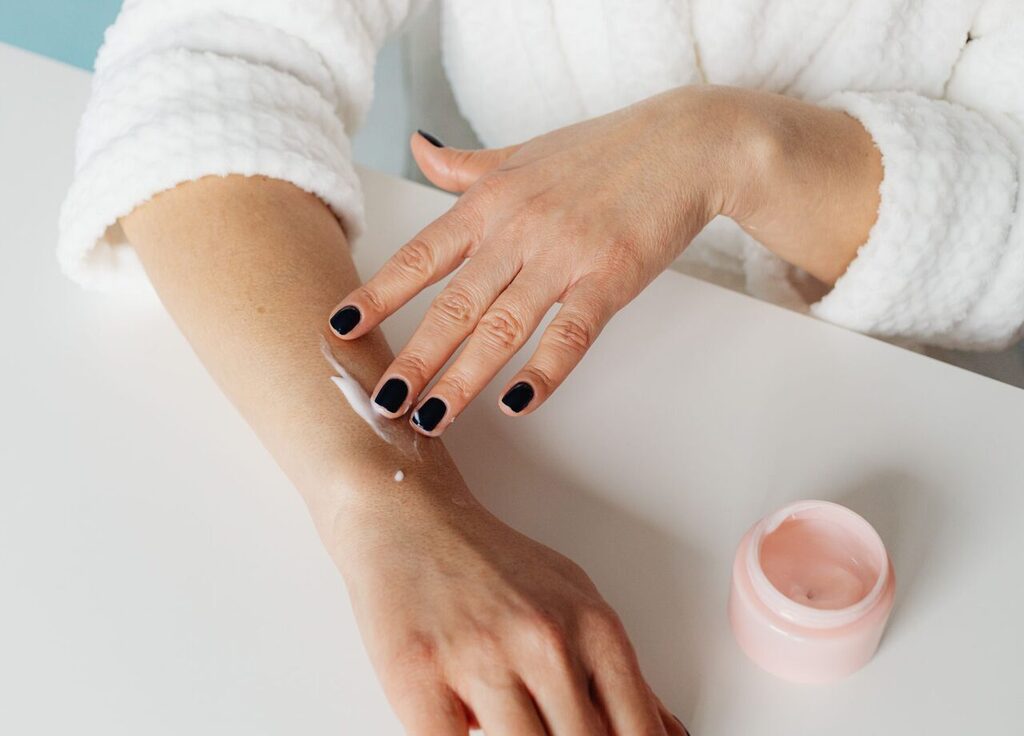
Massage begins once the wound has fully closed, usually from the third week. Using a moisturising cream, press on the scar with the fingertip at moderate pressure and make circular movements; five minutes twice a day is enough. The evidence that massage lightens the colour is weak, but it clearly softens the tissue beneath the scar, reduces adhesion and gets the patient used to touching it. That last point should not be dismissed; a patient who is afraid of their scar neglects its care.
What about vitamin E, plant oils and “scar creams”? There is no evidence that vitamin E improves scars; some studies showed it actually irritated the skin. Creams containing onion extract have a limited and debated effect. These products do no harm, but they should not replace silicone.
What a poor scar is, and when to intervene
Some scars do not turn out as hoped despite all the care. Three situations need to be told apart. A widened scar is one where the line has not stayed thin but has opened by a few millimetres; it is usually seen where tension is high, on the shoulder, back and chest. A hypertrophic scar stays within the boundaries of the incision but rises, reddens and itches; it appears in the first months and usually settles with time. A keloid is a type of scar that grows beyond the incision boundaries, spreads into surrounding healthy tissue and does not regress on its own; it is more common in darker skin, on the front of the chest, the shoulder and the earlobe.
For hypertrophic scars and keloids the first step is silicone and pressure therapy. If that is not enough, corticosteroid is injected into the scar, every four to six weeks, over several sessions. If redness persists, a vascular laser can be added, and a fractional laser for surface irregularity. Surgical revision, meaning cutting out the scar and re-closing it, is done only after at least a year has passed and only if it is understood why the scar healed poorly the first time. A revision made without removing those causes brings the same scar back.
When assessing your own scar
- Has at least twelve months passed since surgery? If not, do not pass judgement yet.
- Is the scar spreading beyond the incision boundaries? If so, it should be assessed for keloid.
- Is it still itching, reddening and thickening after the third month? Time for silicone and, if needed, injection.
- Has it been exposed to sun? If so, part of the darkening may be permanent; laser options should be discussed.
- Did you use tape, silicone and sun protection consistently? If not, those need completing first.
Four questions to ask about scars before surgery
The best investment in a scar is an honest conversation before the operation. Ask your surgeon: Exactly where will the scar sit, and can you draw it on me? How long will it be? What will it look like in the first months, and what should I expect after a year? May I see one-year scar photographs of your patients? If you cannot get clear answers, postpone the decision. An approach that describes the scar as “none” in advertising but does not show it in consultation is the main cause of later disappointment.
Smoking, uncontrolled diabetes and certain medications directly affect wound healing and therefore the scar. We covered this in detail in our article on which patients are not offered which operation, and why. For those torn between a tummy tuck and liposuction, our comparison of the scars and results of the two operations is a useful guide.
Frequently asked questions
Does a cosmetic surgery scar ever disappear completely?
No. Every incision leaves a permanent scar; but a well-planned and properly cared-for scar becomes a thin, pale line under clothing by the end of a year. The goal is not to eliminate the scar but to make it unnoticeable.
When does a surgical scar fade?
Redness usually begins to recede after the third month and is noticeably reduced by the sixth. Full maturation takes twelve to eighteen months. Judging the final appearance before then is misleading.
Does silicone gel really work?
Yes. Silicone is the method with the best-documented effect in scar care. It is started once the wound has closed and used twice a day for at least three months. An expensive brand is unnecessary; a plain gel whose active ingredient is silicone is enough.
Is there such a thing as a scarless tummy tuck?
No. An incision is essential to remove excess skin, and the scar is as long as the skin removed. “Scarless” is either an exaggeration meaning the scar stays under the underwear line, or it describes a procedure that removes only fat, not skin.
Why does a surgical scar darken in the sun?
In fresh scar tissue the pigment cells behave erratically; sunlight stimulates them and the scar can stay permanently dark. That is why the scar is kept out of the sun throughout the first year, with high-factor sunscreen or tape if it will be exposed.
Can someone with keloids have cosmetic surgery?
Yes, but with more careful planning. In a patient with a history of keloids, incision sites are chosen with more care, silicone and pressure therapy begin early after surgery, and corticosteroid injection is planned if needed. This risk must be discussed in consultation.
Can a poor scar be corrected?
Yes. Injection and laser can be used for hypertrophic scars, and surgical revision for widened scars. Revision requires at least a year to have passed and an understanding of why the scar healed poorly.
Would you like a clear answer about your scar?
In consultation we draw on you exactly where the incision will sit and explain plainly what to expect after a year. If you have a scar you are unhappy with, let us assess the options together.