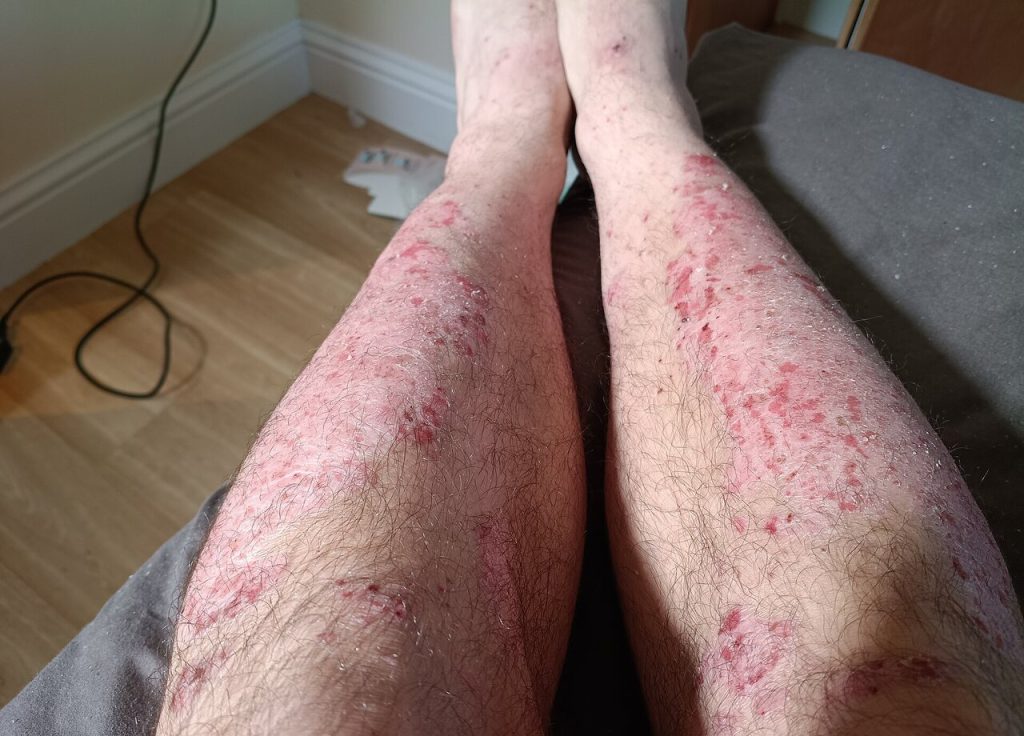
Psoriasis is a non-contagious chronic skin disease with sharply demarcated red plaques covered by silvery-white scales. It is immune-mediated and follows a course of flares and remissions. With the right treatment plan and regular follow-up, symptoms can be controlled to a large extent.
Symptoms
- Thick scaly plaques on knees, elbows, scalp and lower back
- Itching, tightness and occasional pain
- Nail pitting, thickening and discolouration
- Joint pain and swelling in some patients (psoriatic arthritis)
Triggers
Stress, throat infections, skin trauma, certain medications, smoking and alcohol can trigger flares; recognising them is part of disease management.
Treatment Options
Topical treatments (corticosteroid and vitamin-D creams with moisturising care) for mild disease; phototherapy (narrow-band UVB under supervision) for widespread involvement; and systemic or biologic therapies for moderate-to-severe cases, planned with suitability assessment and laboratory follow-up.
Psoriasis is a chronic condition; treatment aims to control symptoms and improve quality of life. Treatment choice must always follow a physician examination.
Frequently Asked Questions
Is psoriasis contagious?
No. It does not spread by handshake, pool or shared items.
Can psoriasis be cured permanently?
As a chronic disease, a promise of permanent cure would not be accurate; current treatments can however provide long symptom-free periods.
Request an appointment for evaluation.